










Understanding Cutting Techniques for Hair Extensions
Professional Development Guide
Cutting extensions is a refined skill that involves much more than simply trimming length. It requires a deep understanding of how to shape, blend, and remove weight to create a natural, seamless finish. When done correctly, cutting extensions not only improves the final result but also enhances wearability, comfort and longevity.
For stylists working with extensions, refining your cutting techniques is key to delivering consistently high standards in the salon. Below is a focused guide to the core principles and techniques that underpin expert extension cutting.
Core Principles of Cutting Hair Extensions
1. Always Cut Dry – After Application
Why?
Cutting dry allows you to see the true density, shape, and fall of the hair once extensions are in place. Wet cutting can distort the natural behaviour of the hair, leading to poor blending and uneven results once dry.
How?
Train yourself to assess balance and weight visually and tactically on dry hair. Always blow-dry and smooth through before beginning any cutting.
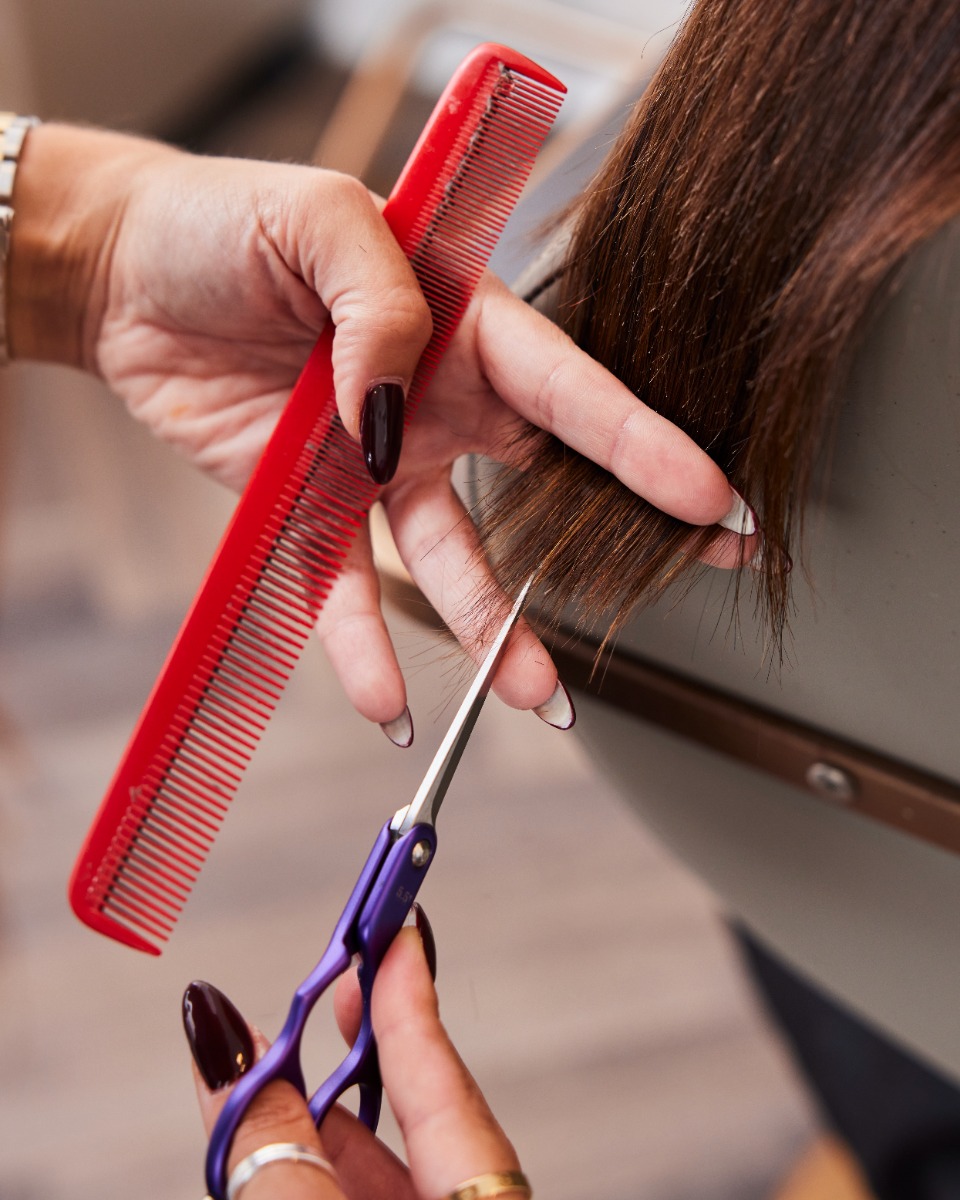
2. Use the Middle of the Blade - Avoid Blunt, Straight Lines
Why?
The middle of the blade offers greater control and stability. Cutting with the tips can result in sharp edges or accidental slicing, while cutting in a straight line creates harsh, unnatural finishes.
How?
Use gentle point-cutting or slicing motions with the centre of your blade to soften lines and maintain a natural texture throughout.
3. Add Face-Framing Layers
Why?
The area around the face is where disconnections between natural hair and extensions are most visible. Adding layers here helps blend lengths and enhances facial features.
How?
Use the client’s face shape as a guide for layer placement and always check for balance on both sides when viewed from the front.
4. Remove Weight to Encourage Movement
Why?
Extensions add bulk - particularly in the mid-lengths and ends. Without removing weight, the style may appear heavy, unnatural, or static.
How?
- Slicing – Slide scissors through the mid-lengths and ends to break up weight lines.
- Texturising - Use scissors or razors to add dimension and airiness to the shape.
- Internal layering – Strategically reduce volume without removing external length.
Cutting Techniques to Revisit and Refine
- Point Cutting: Softens edges while keeping structure
- Thinning: Lightens bulk at roots or mid-lengths for movement
- Freehand Cutting: Ideal for fringes or personalised shaping
- Texturising: Softens lines for a more blended finish
- Spiral Tapering: Blends natural hair into extensions without bulk
- Flat Tapering: Removes weight pre-application for smoother integration
- Graduation: Typically avoided with extensions - opt for soft layering instead
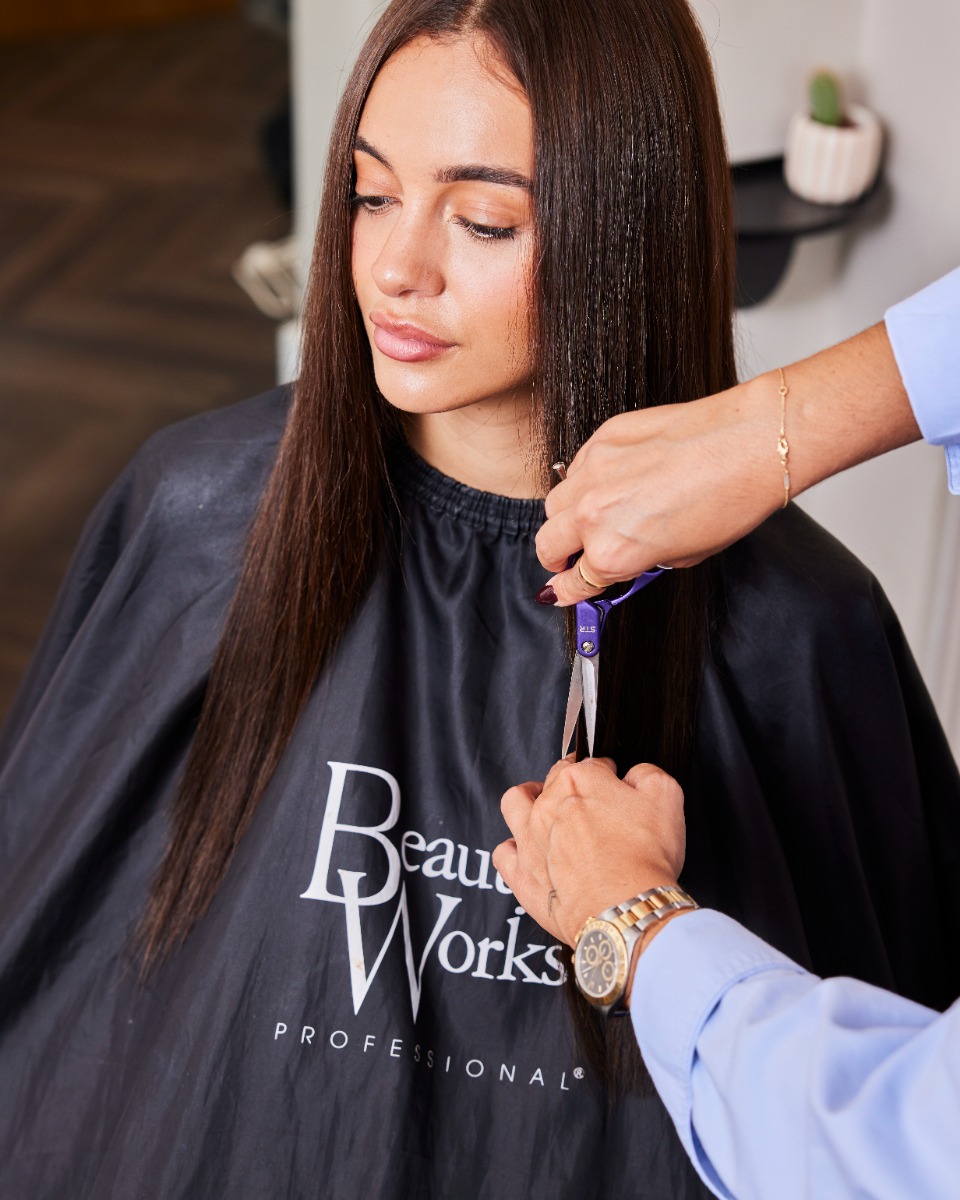
Confidence Comes from Technique
Cutting extensions is a craft - it improves with practice, reflection and technical understanding. By mastering key techniques and staying focused on the fundamentals, stylists can deliver a more professional, polished result every time.